I think one of my more interesting struggles while being in Japan is the food. Japan has an interesting taste pallet when it comes to their food, and this causes them to have some interesting interpretations of 洋食 (ようしょく or Western food). One easy example that I can think of is Japan’s use of corn within their meals. Japan puts corn on quite a lot of things such as pizza, Salisbury steak, backed potatoes, etc. To my western style brain and because I do not necessarily like corn, it is very odd to me as to why Japan would put corn on the things that they do.
Other than that minor thing however, over my time in Japan I have experienced a variety of food that as all delicious. In terms of 和食 (わしょく or Japanese food), I have experienced most of the major food items such as Ramen, Sushi, Udon, Unagi (Ell), Tonkatsu, etc. Unfortunately, I have not had the opportunity to experience Soba, Tempura, or expensive sushi yet, but there is still time to scratch these items off my bucket list.
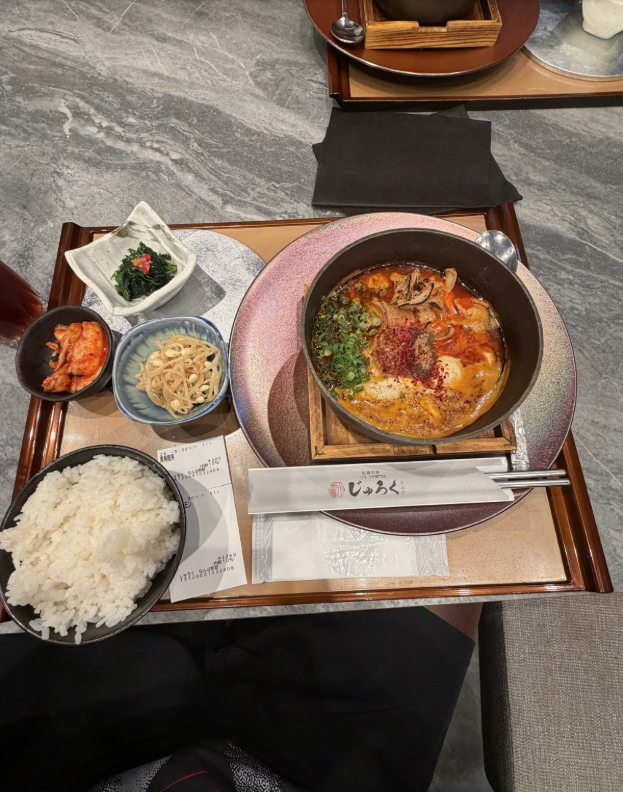
I think the best overall foot that I have tried so far is a tie between Yokohama style ramen and a Japanese Korean fusion Mabo Dofu dish that is from a restaurant in Osaka-Umeda Station. Yokohama style ramen features thicker, strait noodles in a rich, umami soup that typically combines pork-bone broth with a soy sauce base. It is mainly topped with pork, spinach, and seaweed. The Japanese Korean fusion Mabo Dofu is a twist on a famous Sichuan Chinese dish (Mapo Tofu) that swaps the Sichuan peppercorns for milder seasonings such as miso or soy sauce making for a more savory dish.
When I first experienced Yokohama style ramen, I thought to myself “This is definitely the best ramen in Japan that I have experienced so far”. It was the perfect amount of salty and umami. All the toppings were perfect for the dish to balance all the flavors. The Mabo Dofu was also a perfect balance of Korean and Japanese flavors providing a rich, chili, and tangy flavor along with the protein and rice.
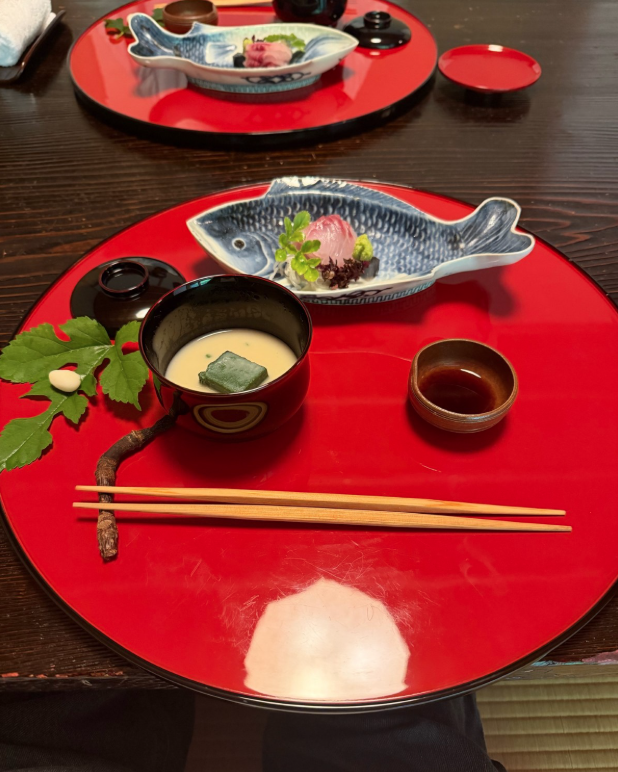
More recently, I visited a three-star Michelin restaurant in the mountains of Kyoto called Miyamaso (https://guide.michelin.com/jp/en/kyoto-region/kyoto/restaurant/miyamaso). To summarize, eating at this restaurant is an experience of the Kyoto mountain side wrapped in a journey of local food. Each dish came with its own story of how it was prepared and what it meant to the local environment. Although, I would more than likely never eat the contents of some of the dishes again, the flavor, story, and aesthetic of the food was truly an amazing experience, and I am so glad that I got the chance to experience it.